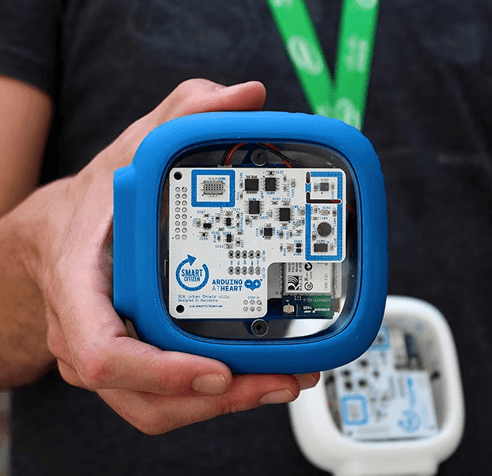
Built Open-Source Smart City Technology

Making Sense EU
Built open-source smart city technology that helped citizens configure IoT sensors, collect environmental data, visualize civic issues, and coordinate grassroots citizen science.
Category / Type
Civic technology; smart cities; citizen science; open-source IoT; environmental sensing; participatory data; EU H2020 research.
Client / Venture / Internal
EU H2020 project work with Making Sense EU.
Project Link
https://making-sense.eu/
Context
Making Sense was an EU H2020 project focused on empowering citizens through personal digital manufacturing, co-design, and deployment of environmental sensors.
The project worked with grassroots groups and communities across European city pilots to monitor environmental issues, including noise, air pollution, and radiation. The work connected open-source IoT, citizen sensing, participatory workshops, data visualization, and civic action.
Wicked Problem
Smarter cities do not automatically mean empowered citizens.
Government data often fails to capture lived experience, especially when communities are dealing with environmental problems like noise or air pollution at the street level. Communities may know something is wrong before official systems can see it, but they need accessible tools to collect evidence, understand the data, and advocate for change.
The challenge was to turn environmental sensing into civic capacity: helping grassroots groups configure sensors, collect reliable data, make that data visible, and use it to support community-driven interventions and policy conversations.
Solution
Lucas worked as a design technologist on the Making Sense team, building technology that helped citizens participate in environmental sensing.
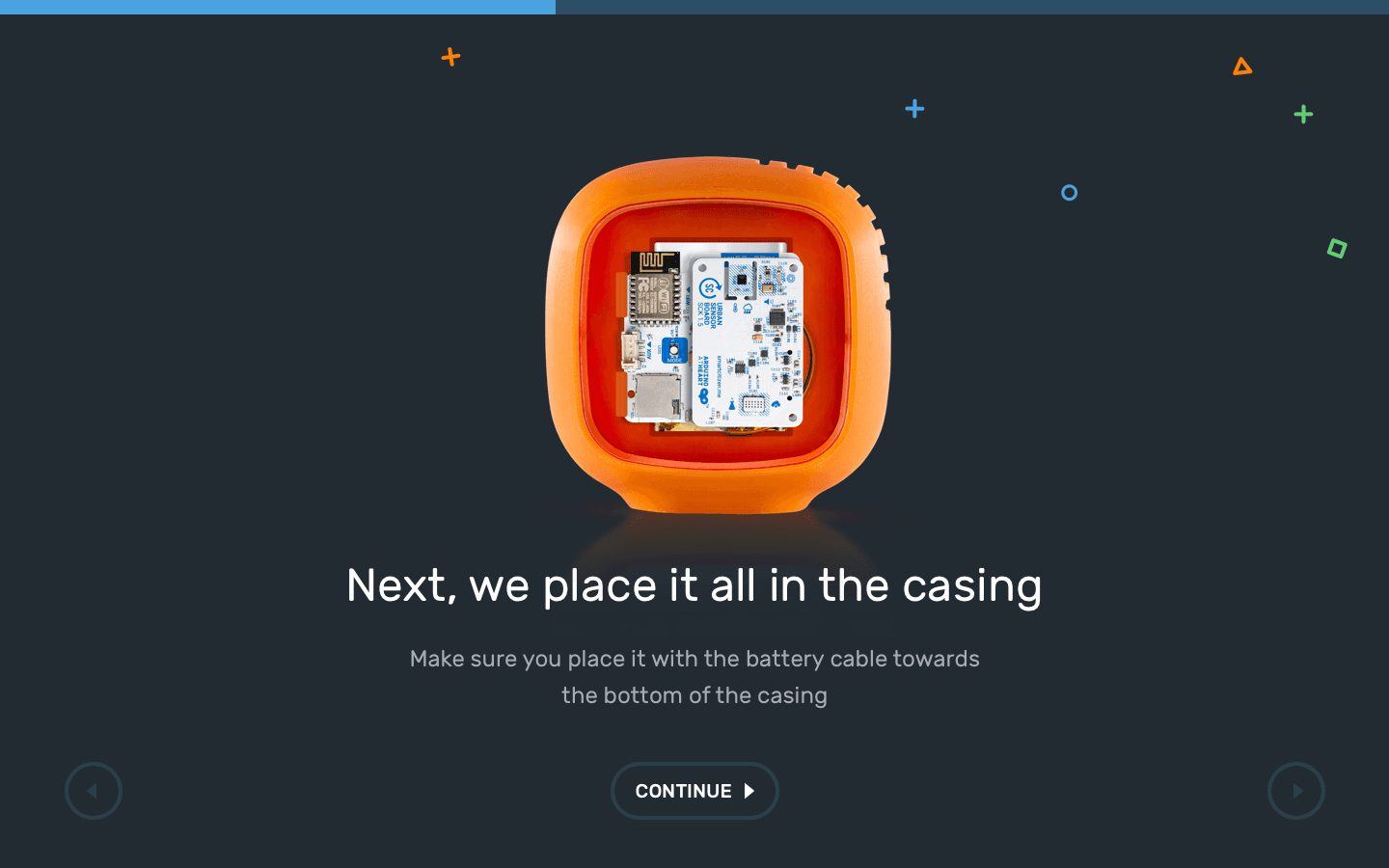
The work included an onboarding web app for open-source IoT sensors, interfaces for configuring devices, data collection workflows for noise and air pollution, and civic data visualizations that made environmental conditions easier for communities to understand and act on.
The project supported citizen science by providing grassroots groups with tools and methods for collecting local evidence and coordinating civic responses. The work was part of a broader Smart Citizen toolkit and participatory sensing approach developed with European research and civic partners.
Outcome / Impact
Making Sense helped communities use open-source sensing and civic data to advocate around environmental issues.
Built onboarding technology for open-source IoT environmental sensors.
Supported citizen configuration of sensors for noise, air pollution, and other environmental data.
Created civic data visualization and citizen-science workflows.
Worked with grassroots groups across city pilots.
Contributed to work that received academic recognition, national press coverage, and influenced policy change.
Findings, tools, and methodologies were published openly through the EU-backed project.
Role / Contribution
Design technologist.
Lucas helped design and build the onboarding web app, sensor configuration flows, civic data tools, and community-facing technology that allowed citizens to participate in environmental monitoring.

Supporting Proof / Artifacts
Making Sense EU website: https://making-sense.eu/
EU H2020 / European Commission co-funded project context.
Open-source IoT sensor onboarding web app.
Citizen sensing pilots across Europe.
Smart Citizen toolkit and environmental sensing methods.
Traverse in Space capabilities deck case study: Making Sense EU.